I let my dog outside earlier this week, as is our morning routine. It wasn’t until I checked on her later that I noticed nearly a quarter of my backyard was “disheveled.”
A regional vice president for Texas Farm Credit said agriculture remains a major part of the East Texas economy but continues to face challenges from rising costs and barriers for new producers.
Every so often, landowners who call our office are looking for financial assistance to improve their property. The good news is that there are more opportunities than many people realize.
Tropical Storm Edouard moved inland this week after making landfall near the Texas-Louisiana border, bringing heavy rain, flooding and strong winds across Southeast Texas.
According to the USDA Animal and Plant Health Inspection Service (APHIS), 46 cases of NWS have been identified in the United States since June of this year.
It is truly hot and dry in East Texas. That means lawns, landscapes, gardens and everything else growing outside are using water quickly. For many homeowners, the natural response is simple: water more.
A gentleman from Hudson stopping in and asked me this week if he should put down landscape fabric around his fruit trees as a mulch. My answer surprised him.
August is a good month to take a close look at the trees around your home, pasture or property. Some of the problems you see now may have actually started months ago.
The pasture mealybug, a tiny, hard-to-detect white insect, has already damaged thousands of acres of Texas pasture and hay, and experts urge producers to watch for drought-like patches and report suspected infestations to their county extension office.
Last week a local resident asked me if they could move their old rose to their new house across town. It was a sentimental gift, and they wanted to “move” it with them to their new residence.
The detection of New World Screwworms in Texas has generated plenty of questions — and plenty of opinions. Unfortunately, not all of the information being shared is accurate.
Symptoms of a freeze that swept across East Texas in March are still being felt in May, as Lufkin blueberry farms drudge through a season far slower than usual.
Most pond owners wish that something was a little bit different about the pond on their property. Maybe it’s that the water’s too muddy. Maybe there are too many weeds. Or maybe the fishing just isn’t what it used to be.
That small plastic tag stuck in the pot is one of the most useful tools you have when selecting plants. It tells you how that plant is expected to grow and what it needs to perform well.
If you’ve flipped on an outside light lately, you’ve probably seen them. I saw them at the Lufkin Rodeo the other evening and I’ve got them at my house.
In her family kitchen on the south end of Lufkin, Hazel McWilliams watches closely as the sugar on top of her chocolate crème brûlée turns from white to golden under the flame.
When Tucker Montes walks into the show ring at 8 a.m. on Friday, March 27 at the George H. Henderson Jr. Exposition Center in Lufkin, it won’t just be another competition.
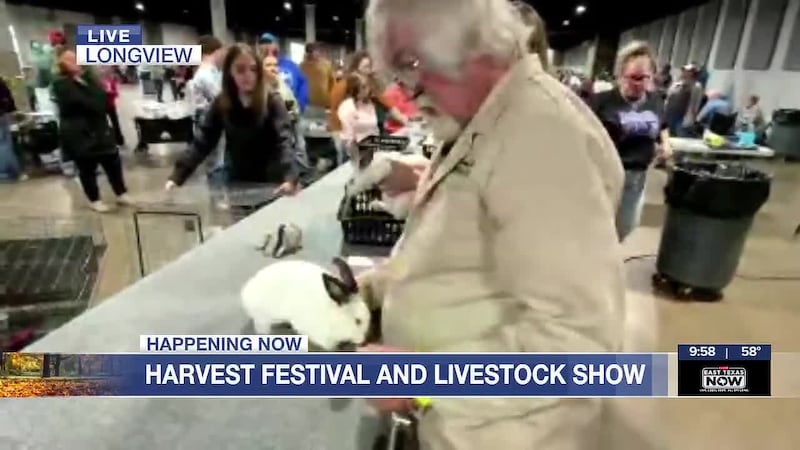
From a distance, it can look like ribbons, livestock shows, baked goods, arts and crafts, welding projects, and auction night. And yes, those things are part of it. But if that’s all we see, we’re missing something deeper.
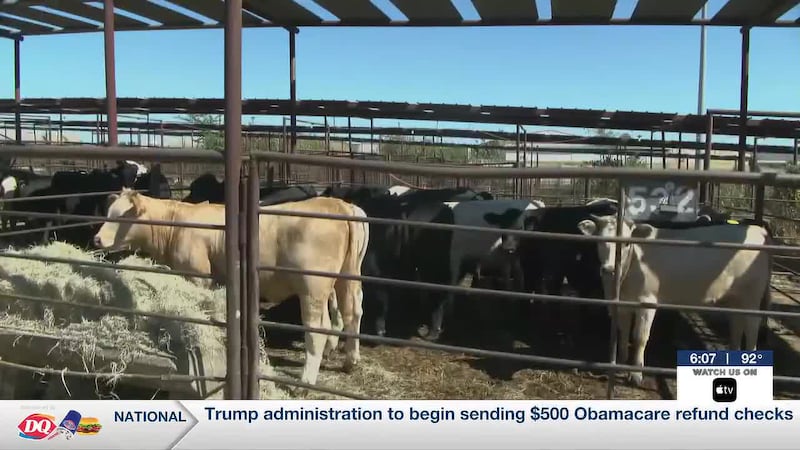
The U.S. cattle supply has reached a 75-year low, according to a new USDA report released at the beginning of the year, with consumers unlikely to see cheaper beef prices at grocery stores anytime soon.
The U.S. Department of Agriculture and Texas are preparing to protect the state’s multi-billion dollar livestock industry after unveiling a center for dispersing sterile screwworm flies Monday. It’s the latest step in a larger effort to prevent New World screwworms from reaching U.S. soil and harming the livestock industry.
Every year about this time, East Texans get fooled by a few warm afternoons. The sun feels good. The soil looks workable. Garden centers start stacking transplants. Even some forecasts for next week shows we may reach the upper 70’s! And suddenly, people start planting like spring has already arrived.
This Tuesday, Jan. 20, the Angelina County Extension Office will host its monthly noon gardening seminar on Earth-Kind Gardening. Despite the name, there’s nothing “new-agey” or extreme about it.
Right now, multiple states are battling a tiny insect that’s threatening cotton crops in our country, including here in Texas. The Texas A&M Agrilife Extension says it is monitoring the recent invasion of “Cotton Jassids”.
Few things irritate homeowners faster than opening a pantry or closet and watching moths flutter out. It was a call from a longtime resident of Angelina County and friend that got me pondering about moths in the house.
With cooler nights settling in and the rains finally returning, many cattlemen are feeling confident heading into winter. But before the real cold arrives,
If you grew up in East Texas, you probably learned one thing about persimmons the hard way: bite into the wrong one, and your mouth locks up tighter than a rusty gate. That was your introduction to the native persimmon — and probably the last time you even thought about the fruit.
Every year I hear the same thing, “We like to get our trees in the ground in the spring when everything starts growing.” It sounds reasonable to wait for spring, but with trees and shrubs it couldn’t be further from the truth.
Before you grab the sheets and start covering the yard, AgriLife specialists say most gardens can handle a quick frost. Only tender potted plants, tropicals, and warm-season annuals need extra help.
After weeks of dry conditions, most of East Texas finally caught a good, soaking rain. At my place in Clawson, I’ve accumulated just over four inches, and that’s well below some of my buddies.